The girl child is a biological female offspring from birth to 18 years of age. This is the age before one becomes a young adult. This period covers the creche, nursery or early childhood (0-5 year), primary (6-12 years) and secondary (12-18 years). During this period, the young child is totally under the care of the adult who may be parents or guardians. Which means she is dependent on the significant of others.
Education is the process of providing information to an inexperienced person to help him or her develop physically, mentally, socially, emotionally, spiritually, politically and economically. Education is the process through which individuals are made functional members of their society (ocho 2005).
It is a process through which an individual acquire knowledge and realises his or her potentialities and uses them for self actualisation, to be useful to themselves and others. It is a means of preserving, transmitting and improving the culture of the society.
To educate a girl child means to train her mind, character and abilities. Education is fundamental human right that should be availed to every girl child irrespective of the age and nationality. The importance of education in the life of a girl child can never be over-emphasised.
In both spiritual and temporal mundane aspects of human existence, education is paramount. It is the light that shows the way by removing the darkness of ignorance; salt that gives the taste of life; the medicine that cures and the key which open doors. The greatest favour a girl child can get is “to get education” and “to give others education.”
Therefore, educating the girl child translates to better health for the future generations, reduction in child mobility and mortality thus triggering a snowball effect of achieving all other sustainable development goals in a viable manner. The girl child education also prepares her to face realities in society and teaches her to be a good wife and mother. When she is educated, she realises the full potentials endowed in her; she discovers to be whoever and whatever she wants to be.
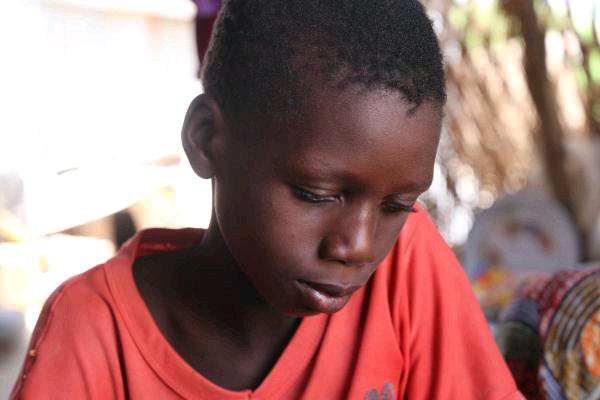
Thirteen-year-old Abdulkarim’s typical day as an Almajiri started at 4.30 a.m. with prayers and a Qur’anic recitation, and ended at 10 p.m. with another Qur’anic recitation. In between, there were three slots in his schedule for begging. In a typical day, begging took up a full six hours.
“We would go to beg at 6 a.m. and return at 7 a.m. We would go out again at 11 a.m. and return for prayers at 2 p.m. Finally, between 6 p.m. and 8 p.m., we were back on the streets again, begging,” Abdulkarim said, sitting under a tree in his village in Mafa, Borno State.
He and 30 other children had just been returned to Borno from Gombe State, where they had been living for several years as Almajirai.
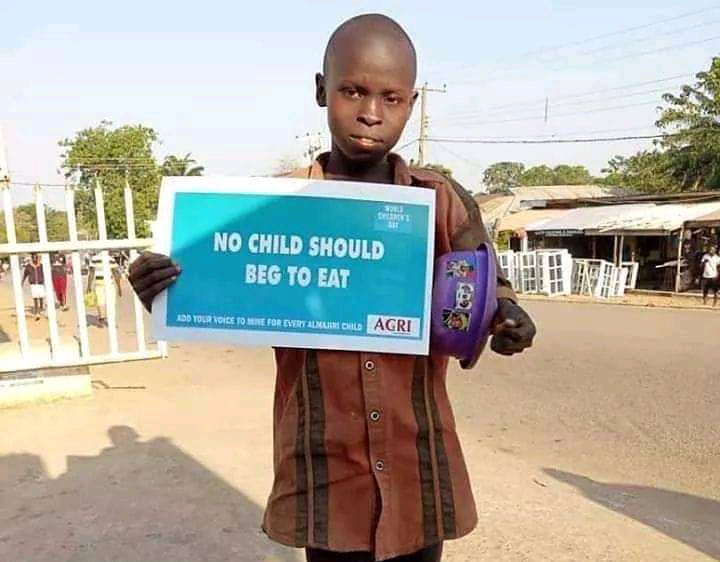
Under the Almajiri system, parents send their children, mostly boys aged 4-12, to distant locations to acquire Qur’anic education. Many rural and poor families who can’t afford formal schooling have made this choice. It is difficult to know the number of Almajiri children in Nigeria, but some estimates put it at about 10 million, or about 81 per cent of the more than 10 million out-of-school children in the country.
While parents may believe they are fulfilling their obligation to provide a religious and moral education to their children and that the learning is provided free of charge, Almajiri children are often forced by their teachers (Mallams) to beg in the streets to fund their education.
While Abdulkarim appears calm and at peace with himself, in the Mahadiya village of Yobe State, Abdusalim, 12, is ill at ease. He has spent half his life as an Almajiri and is struggling to adjust to a life where begging is not part of his daily routine. He is one of 371 children returned to Yobe from other parts of northern Nigeria and has spent longer than his peers as an Almajiri.
In the wake of the COVID-19 pandemic, state governments in northern Nigeria banned the Almajiri system as a measure to limit the spread of the coronavirus, returning many children within the system to their families and communities of origin.
Abdusalim arrived home and reunited with his family in Yobe State while Abdulkarim was welcomed home by his grateful mother.
UNICEF has supported the return of these children and their successful reunion with their families.
“UNICEF made sure that health, nutrition, water, hygiene and sanitation services were available in the temporary shelters the government provided,” said Miatta Abdulai, UNICEF’s Child Protection Specialist in Maiduguri. “We also provided the children with safe psychosocial, recreational and life skills training as the first steps towards their reintegration into their communities, outside the Almajiri system.”
“We put in place community monitoring mechanisms to ensure these children remain with their families and do not return to life as Almajirai,” said Abdulai.
When asked the delicate question of whether the desire for a religious education was the sole reason for sending her son away, Abdusalim’s mother Hadiza admitted other factors were part of the decision. “It is very difficult to provide for 12 children,” she said.
Aisha Uma, Abdulkarim’s mother, cited security concerns, the context of the 10-year armed conflict in north-east Nigeria that has seen so many children displaced, abducted or killed. “The conflict led us to send him to Gombe“ she said. “Prior to the security problems in the state, he was attending formal school and also Sangaya (Islamic school) in Mafa.”
Both children are home and happy to be reunited with their families, and say they never enjoyed being Almajirai.
“I don’t miss it at all. Life as an Almajiri was very tough,” said Abdulkarim. “I had to fend for myself, watch over myself, be my own security, and beg to support myself. I never enjoyed being an Almajiri because the system exposes one to so many dangers and it is very difficult.”
What happens to these children in their life outside the Almajiri system will determine their next move. Currently, they have big dreams.
“I want to read the Quran, go to formal school and become a businessman,” said Abdulsalim. Abdulkarim hopes to go back to school and farm in his spare time. “I see myself owning big businesses and providing mentorship support to younger ones in my community,” he said.
Nigeria has the highest number of out of school children in the world with over thirteen (13) million as at the most recent estimates. The highest number of these children are in the north-east of Nigeria, currently bedeviled with security challenges posed by Boko Haram terrorists. Many of these children are victims of the Almajiri system a currently unregulated, Islamic scholarship practice of sending children (some as young as six) to other states and nations for Islamic studies.
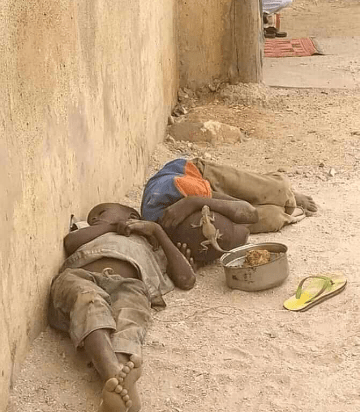
Generations upon generations, there is no end to the sight of young children of school age roaming the streets in a quest for survival. As an age-old tradition, these kids are popularly called ‘Almajiri’ – children from poor homes usually sent to Islamic boarding schools. Formal education remains a far cry for thousands of these children.
Conflict experts hold that having vulnerable children in cities across a nation that is fighting an ideological war is a terrible risk. For instance, it has been widely reiterated that the reason Boko Haram insurgents has continued to wage war against the Nigerian state is as a result of a robust recruitment source. The almajiri system has created a mass of vulnerable younglings who are susceptible to the antics of conflict promoters upon the promise of material reward or psycho-social brainwashing.
The Frenchman played the entirety of United’s latest defeat that ended their 29-game unbeaten run away from home.
The defeat leaves Ole Gunnar Solskjaer under further scrutiny as United’s own winless run extends to three games as they continue to look less than the sum of their expensive parts.
“To be honest, we’ve been having this kind of game for a long time and we haven’t found the problem,” Pogba said.
Former Super Eagles midfield trojan John Mikel Obi has revealed he had to sign for Chelsea in 2006 because the futures of three other players were tied to the deal.
Mikel spent 11-successful years at Stamford Bridge after signing from Norwegian club Lyn Oslo in what was one of the most controversial transfers in the last two decades.
The Kuwait SC midfielder has now revealed three of his teammates at Nigeria U-20 level, Chinedu Obasi, Emmanuel Sarki, and Ezekiel Bala were also undergoing trial at Stamford Bridge and would have had their contracts had he not signed.
Despite Mikel’s best efforts, the three players would go their separate ways in subsequent months as Chelsea did not offer them a contract.
Hello guys, my name is Umar Ibrahim Tsiga a student of kaduna polytechnic from the department of mass communication, the purpose of this blog site (SportXtra) is to entertain you guys with sports around the world, keep in touch as you get latest update on sports around the world.



 News/SportXtra